Meaning of the Song It All Over Now Baby Blue
It's All over Now, Baby Blue
Bob Dylan
- Overview ↓
- User Reviews ↓
- Variations ↓
- Also Performed By ↓
- Attributes ↓
If "It's All Over Now, Baby Blue" had no other lyrics of worth besides the chorus, it would still be a beautiful song. The folk guitar chord changes and somber melody alone make listeners prick up their ears to listen. And there is something simply heartbreaking, allusively so, about the chorus line "And it's all over now, Baby Blue." What is all over? Who is the singer singing to, as if to a child? Is it meant as a lullaby or as a wake-up call? Bob Dylan seems under the influence of Symbolist poets here, as if Rimbaud was being channeled through Woody Guthrie -- which was quite a remarkable accomplishment in pop music in 1965; at the end of the day, the poem/song is self-justifying and its meaning self-contained, and ultimately as fleeting as the complex emotions evoked by music. But if Dylan was playing with Symbolism with a capital "S," he was also utilizing symbolism with a lower-case "s"; "It's All Over Now, Baby Blue" features a wide cast of characters: "your orphan with his gun," "the empty-handed painter," "your seasick sailors," etc. Dylan seemed to be continuing his general observation that the "times they are a-changin'," and, like Mr. Jones, Baby Blue better stand aside while the "carpet, too, is moving under" him/her. But unlike "A Hard Rain's a Gonna Fall" and the songs alluded to above, "It's All Over Now, Baby Blue" seems to be about change on a more personal level. Either way, Baby Blue seems as out of touch as Dylan's other subjects.
So who is Baby Blue? Well, like most of Dylan's subjects, the character is probably an amalgam of personalities in his orbit. But some speculation places the focus sharply on a heavily Dylan-influenced singer/songwriter named David Blue, who pops up, Zelig-like, in name or visage in a variety of pop music moments. He was a friend or possibly just a hanger-on of Dylan's (and Leonard Cohen's as well) from the early days in New York's Greenwich Village folk scene, and is pictured in the cover photo of Dylan and the Band's Basement Tapes (in the trench coat), appears in the Dylan film Renaldo and Clara (1978), and is speculated to have been the subject of Joni Mitchell's "Blue." Another person mentioned when fans discuss "It's All Over Now, Baby Blue" is Paul Clayton, a folksinger who had a fair amount of influence on Dylan. Of course, there may be a good amount of Bob Dylan himself in Baby Blue, the singer certainly undergoing great artistic and personal change in the mid-'60s. On Bringing It All Back Home (1965) alone, half of the songs feature -- for the first time -- a band of accompanying musicians and the album is a roughly half electric/half acoustic affair. These forays into rock & roll and pop music alienated a vocal segment of his fan base. Perhaps the singer sees himself moving on from them. It is very likely that they were the target. There is much evidence to support this theory, particularly Dylan's choice to play "It's All Over Now, Baby Blue" as his last song -- acoustically -- at the infamous Newport Folk Festival, after having his electric set met with boos. Coming back to kiss off the crowd with the number, the singer seems to relish such lines as "look out the saints are coming through." One can only guess what he must have thought of the crowd finally cheering him. Those who have seen the D.A. Pennebaker documentary of the 1965 British tour, Don't Look Back (1967), will recall the songwriter listening with feigned polite attention to Dylan wanna-be Donovan playing Dylan one of his new songs, only to have Bob blow away Donovan and all those in the room with his "It's All Over Now, Baby Blue." The timing of such instances suggests spite, vitriol, and a supreme sense of confidence and self-righteousness.
"It's All Over Now, Baby Blue" has been covered countless times. Dylan himself originally recorded it acoustic, with just Joseph Macho Jr. on a melodic bass guitar, on Bringing It All Back Home (1965). Other standout Dylan versions include the solo acoustic recordings from the Genuine Bootleg Series, Take 2 (1996), Biograph (1985), and bootlegs of the Newport Folk Festival (1965). Van Morrison recorded a swinging, dreamy version with Them in 1966 on Them Again. That recording was later sampled by Beck for his "Jack-Ass." Morrison also covered it live and had Dylan join him when the two toured together in the late '90s. Bootlegs present a very Rolling Stones-y take on the song -- specifically "Wild Horses," with Mick Taylor-esque guitar flourishes. Hole used the Them version as a blueprint for its cover on the soundtrack to the film The Crow: Salvation (2000), singer Courtney Love doing her best to sound like Thalia Zedek. Marianne Faithfull did a dark folky version on 1988's Rich Kid Blues. And of course, the Grateful Dead and solo Jerry Garcia had the song in their extensive repertoire of Dylan songs, one version of which is available on Dick's Picks, Vol. 9 (1997).
Appears On
| Year | Artist/Album | Label | Time | AllMusic Rating | |||
|---|---|---|---|---|---|---|---|
 | 1965 | Bob Dylan Bringing It All Back Home | Columbia / Legacy | 4:15 | |||
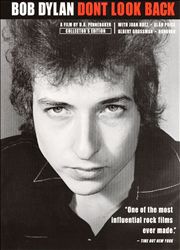 | 1967 | Bob Dylan Don't Look Back | Docurama | ||||
 | 1971 | Bob Dylan Bob Dylan's Greatest Hits, Vol. 2 | Columbia / Sony Music Distribution | 4:13 | |||
 | 1994 | Bob Dylan Thin Wild Mercury Music | spank | ||||
 | 1995 | Various Artists The Music Never Stopped: Roots of the Grateful Dead | Shanachie | 4:13 | |||
 | 1996 | Bob Dylan The Genuine Bootleg Series, Take 2 | |||||
 | 2000 | Bob Dylan The Essential Bob Dylan | Columbia | 0:00 | |||
| | 2000 | Bob Dylan The Very Best of Bob Dylan [2000] | Sony Music Distribution | 4:15 | |||
| | 2001 | Bob Dylan The Q 5 Star Reviews, Vol. 1 | Sony Music Distribution | 4:13 | |||
 | 2002 | Bob Dylan Bringing It All Back Home/Highway 61 Revisited/Blonde on Blonde | Sony Music Distribution | ||||
![Bob Dylan [Limited Edition Hybrid SACD Set]](https://cdn-s3.allmusic.com/release-covers/170/0001/290/0001290510.jpg) | 2003 | Bob Dylan Bob Dylan [Limited Edition Hybrid SACD Set] | Legacy | 4:15 | |||
 | 2003 | Bob Dylan Greatest Hits, Vol. 1-3 | Legacy / Columbia | 4:16 | |||
![Essential Guide to Folk [Essential Guide]](https://rovimusic.rovicorp.com/image.jpg?c=3hYIqhGSUL9AF3GaLEu36T6KsMttLlyBmmVTZ6_CLs0=&f=2) | 2007 | Various Artists Essential Guide to Folk [Essential Guide] | Essential Guide | 4:19 | |||
 | 2007 | Bob Dylan Dylan | Legacy | 4:14 | |||
 | 2009 | Bob Dylan The Collection: Another Side of Bob Dylan/Bringing It All Back Home/Highway 61 Revisited | Legacy / Sony Music Distribution | 4:15 | |||
 | 2010 | Bob Dylan The Original Mono Recordings | Columbia / Sony Music | 4:16 | |||
 | 2010 | Various Artists Singers & Songwriters: Troubadours | Time / Life Music | 4:14 | |||
![Singers & Songwriters [Time-Life Box Set]](https://rovimusic.rovicorp.com/image.jpg?c=yifuox2GnflaUzvcjjp9YphUoDg0hsvx4F4sL4oO-nA=&f=2) | 2011 | Various Artists Singers & Songwriters [Time-Life Box Set] | Time / Life Music | 4:14 | |||
 | 2011 | Bob Dylan Life and Life Only | Left Field Media | 4:13 | |||
 | 2013 | Bob Dylan Music & Photos | Columbia | 4:15 | |||
 | 2013 | Bob Dylan The Complete Album Collection, Vol. 1 | Columbia Records / Sony Music | 4:14 | |||
 | Bob Dylan Forevers Hits | Universal Distribution | |||||
 | Various Artists Time Life Presents the 60s | Time Life | 4:15 |
alexanderellow1964.blogspot.com
Source: https://www.allmusic.com/song/its-all-over-now-baby-blue-mt0026943830
0 Response to "Meaning of the Song It All Over Now Baby Blue"
Enregistrer un commentaire